
What is Tracheal Collapse?
Tracheal collapse occurs due to weakened cartilage of the tracheal rings, resulting in dorsoventral flattening of the tracheal. Further dynamic collapse of the airway can occur throughout the ventilatory cycle as the structural integrity is compromised.
Tracheal collapse can occur as part of Brachycephalic Obstructive Airway Syndrome (BOAS), however it is also described as a discrete condition that is more common in certain toy breed dogs
What is known about the links between BOAS and Tracheal Collapse?
Brachycephalic Obstructive Airway Syndrome (BOAS) is a common condition in short skulled dog breeds and is widely recognised as a major welfare concern (Ladlow, J. et al.).
Through collective investigations spanning 17 broadly flat‑faced breeds, the Cambridge BOAS Research Group has built a detailed and nuanced picture of the phenotypic components that contribute to BOAS across breeds. This body of work not only highlights how the syndrome manifests differently between breeds but also provides a foundation for disentangling the genetic factors underlying various aspects of the disease.
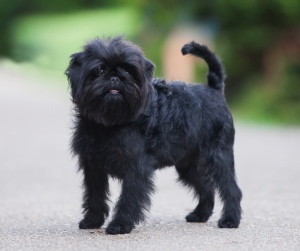
Recent investigations of 14 breeds (Tomlinson, F. et al.) has revealed that tracheal collapse is a significant cause of breathing difficulties in Affenpinschers, with 26% of 69 dogs showing signs of the disorder, having a characteristic ‘honking’ cough.
Tracheal collapse has also been described in the Chihuahua, the Pekinese and the Pomeranian.
Our current work investigating tracheal collapse
We are investigating the genetics of tracheal collapse in multiple breeds, using a whole genome sequencing (WGS) approach with the objective of identifying genetic variants associated with tracheal collapse across dog breeds. A better understanding of the genetic risk factors for tracheal collapse would pave the way for the development of pre-breeding DNA tools with which to reduce the prevalence in at-risk breeds.
Whole Genome Sequencing
We will use a whole genome sequencing approach to generate data from dogs affected with tracheal collapse (cases) and unaffected dogs (controls).
Selected dogs will represent a cross section of breeds known to be at risk, including both brachycephalic and non-brachycephalic breeds. This sampling strategy will enable us to start to disentangle the genetic architecture of this complex condition.
Using our WGS databank of >500 other dogs, we will identify genetic variants that are more common in the cases than in the controls and that are rare/absent in dogs of other breeds (that are not reported to be affected with VIP).
We will filter variants based on their distribution between cases and controls, their predicted impact on the relevant protein and whether they are located in genes with a plausible role in the development of VIP.
Variant follow-up
Variants remaining at the end of the WGS filtering process will be considered ‘candidate variants’.
If a number of candidate variants are identified by the WGS analysis, we would genotype them in a larger cohort of Vizslas, to identify those that associate reproducibly with VIP in this breed. Any that are found at high frequency in unaffected dogs will be excluded.
If candidate variants are not identified after initial WGS analysis, we would proceed to generate WGS from additional cases and controls and repeat the process.
Funding

Our research is generously supported by the Kennel Club Charitable Trust (KCCT).
Please also consider donating to support the Canine Genetics Centre and our IVDD research. It costs about £400,000 a year to keep the Canine Genetics Centre running and we welcome all donations, large or small; How to Support Us – The Canine Genetics Centre