
What is Vizsla Inflammatory Polymyopathy (VIP)
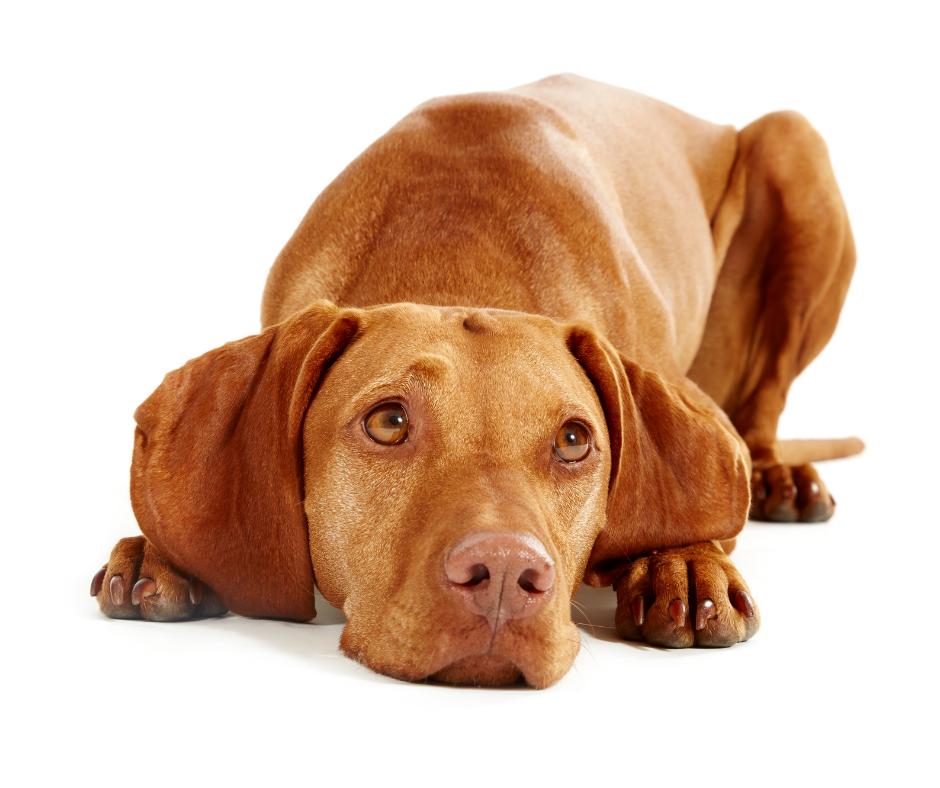
Vizsla Inflammatory Polymyopathy or Polymyositis is a breed specific immune mediated disease. It is most common in young Vizslas (under 2 years of age) but can affect dogs of any age.
The muscles of mastication are typically targeted and this results in severe swallowing problems (dysphagia), difficulty with eating and drinking, regurgitation and excessive salivation. Temporal and Masseter muscle atrophy frequently follows. Occasionally more widespread muscle involvement can lead to generalised weakness and exercise intolerance. Because of the risk of Aspiration Pneumonia, VIP is a serious and life threatening illness.
What is known about the genetics behind VIP?
It has been established that VIP has a genetic predisposition and an association with the major histocompatibility complex (MHC) has been reported (Massey, J et al.). Unfortunately the associated MHC haplotype is common within the breed, making it unsuitable as a basis for a pre-breeding screening tool, and furthermore the penetrance is low, which indicates that other genetic and environmental factors are likely involved.
Our current work investigating VIP
We are utilising whole genome sequencing, as a hypothesis-free approach, to identify additional genetic risk factors that influence the risk of an individual dog developing VIP.
Whole Genome Sequencing
We will use a whole genome sequencing approach to generate data from affected dogs with a confirmed diagnosis of polymyositis (cases) and unaffected dogs over the age of 8 years of age (controls).
Using our WGS databank of >500 other dogs, we will identify genetic variants that are more common in the cases than in the controls and that are rare/absent in dogs of other breeds (that are not reported to be affected with VIP).
We will filter variants based on their distribution between cases and controls, their predicted impact on the relevant protein and whether they are located in genes with a plausible role in the development of VIP.
Variant Follow-up
Variants remaining at the end of the WGS filtering process will be considered ‘candidate variants’.
If a number of candidate variants are identified by the WGS analysis, we would genotype them in a larger cohort of Vizslas, to identify those that associate reproducibly with VIP in this breed. Any that are found at high frequency in unaffected dogs will be excluded.
If candidate variants are not identified after initial WGS analysis, we would proceed to generate WGS from additional cases and controls and repeat the process.
Funding

Our research is generously supported by the Vizsla Health Trust.
Please also consider donating to support the Canine Genetics Centre and our IVDD research. It costs about £400,000 a year to keep the Canine Genetics Centre running and we welcome all donations, large or small; How to Support Us – The Canine Genetics Centre