What are Inherited Eye Diseases in dogs?
Inherited eye diseases (IEDs) in dogs are genetic conditions that cause pain and blindness in thousands of purebred and crossbred dogs every year. These inherited conditions can be congenital (from birth or soon thereafter) or can develop later in life.
These eye diseases generally fall into four broad categories – Retinal diseases (such as progressive retinal atrophy), Lens abnormalities (such as primary lens luxation), structural or eyelid defects and Glaucoma.
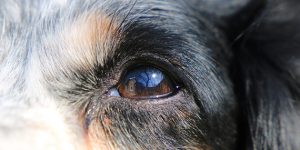
Common IEDs in dog
The Canine Genetics Centre will investigate ANY dog of ANY breed that has been diagnosed with clinical signs of inherited eye disease, but our main research areas are Glaucoma, PRA & PLL.
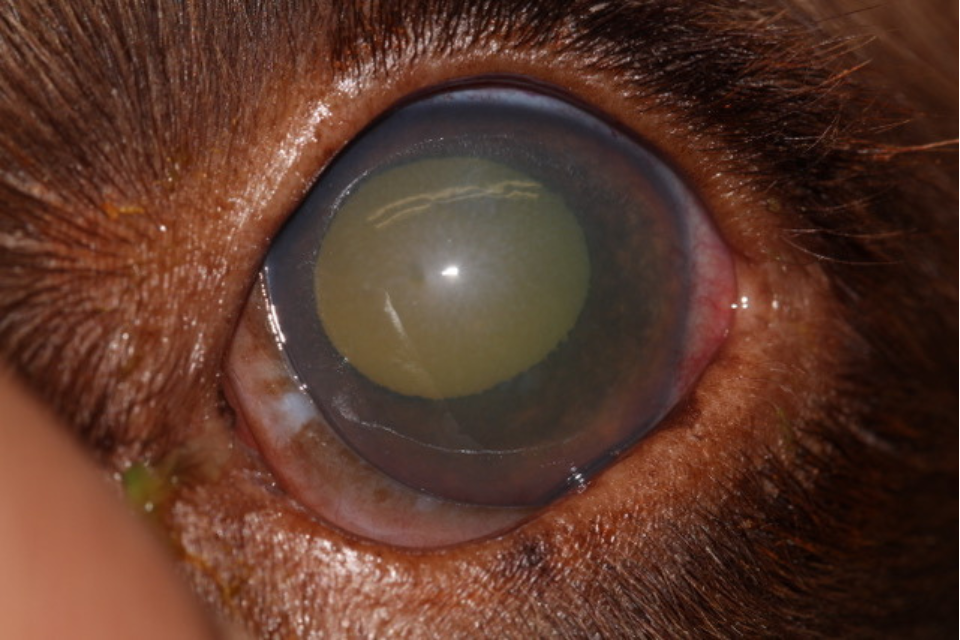
Primary Glaucoma
Glaucoma is caused by a build-up of pressure in the eye ball. In dogs there are two forms – Open Angle (POAG) and Closed Angle (PCAG).
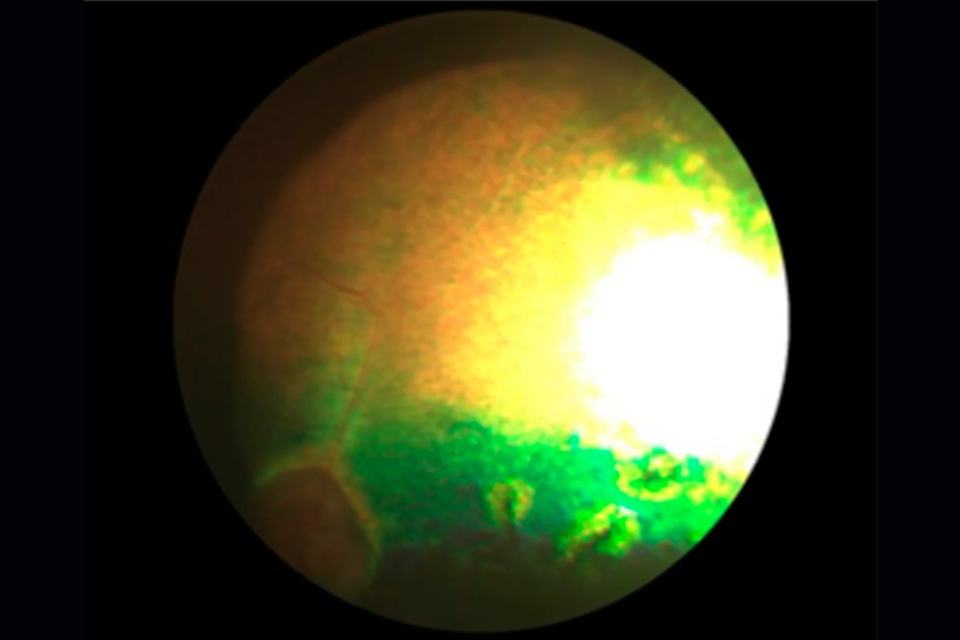
Progressive Retinal Atrophy
Progressive retinal atrophies (PRA) are a group of progressive disorders specific to the retina. Forms of PRA make up nearly half of the known inherited eye diseases.
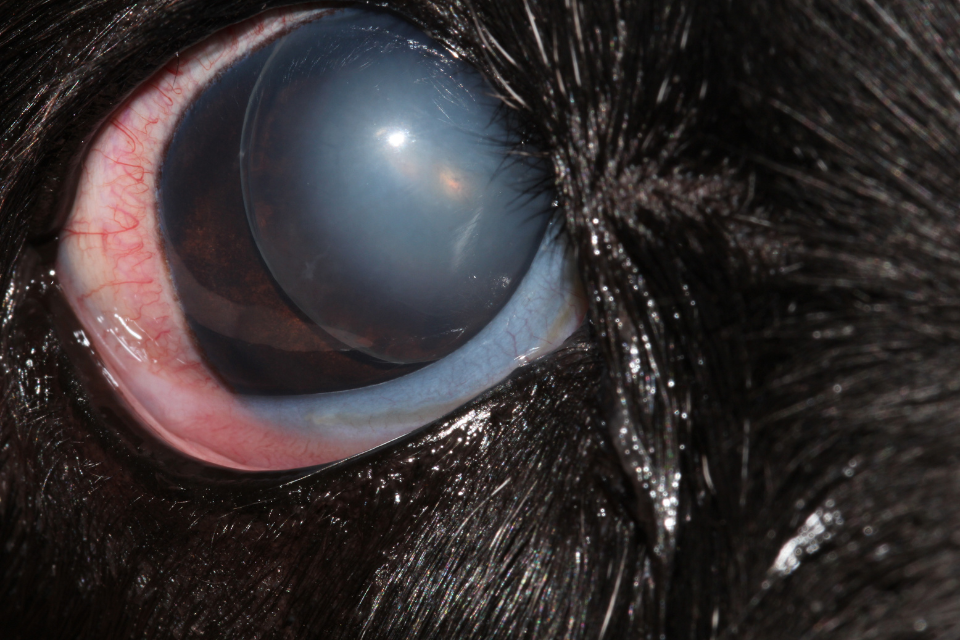
Primary Lens Luxation
Primary lens luxation (PLL) occurs when the zonules, which support the eye’s lens, weaken and ultimately break. PLL can lead to secondary Glaucoma if left untreated.
We work closely with Ophthalmologists across the world as well as the Royal Kennel Club (RKC) and the British Veterinary Association (BVA) to identify new forms of IEDs and thus prevent the spread of disease in future generations of dogs
What is known about the genetics behind IEDs?
To date, over 86 eye disease mutations and 9 risk alleles believed to be associated with disease, located within 61 different genes, have been identified in hundreds of different dog breeds. Many of these ocular diseases are genetically heterogeneous, meaning that clinically similar diseases can be caused by different mutations.
The Canine Genetics Centre have successfully identified nearly 30 of those variants and in 2019, funded by Dogs Trust and with the support of Veterinary Ophthalmologists, we established the Consortium to Research Inherited Eye Diseases in Dogs (CRIEDD) specifically to research inherited eye diseases in dogs.
Consortium to Research Inherited Eye Diseases in Dogs (CRIEDD)
The consortium to research inherited eye diseases in dogs – known as CRIEDD – aims to identify novel mutations responsible for inherited eye diseases in dogs and develop DNA screening tools for these mutations.
We invite the submission of DNA from ANY dog of ANY breed that has been diagnosed with clinical signs of inherited eye disease. The DNA can be collected as buccal (cheek) swabs that can be taken by the dog’s veterinary ophthalmologist, veterinary nurse or owner. To help facilitate the research process we ask for detailed information about the dog and his/her diagnosis. We can provide DNA buccal swab kits free of charge.
In addition to our research to identify novel IED mutations we have also developed a database that details all mutations known to cause IEDs in dogs; this database represents a much-needed resource for veterinary ophthalmologists attempting to keep abreast of developments in the field. The database is available online at https://www.criedd.org and can be searched for disease/phenotoype or breed of dog.

Funding

Our original research was generously supported by the Dogs Trust and more recently as part of the Jean Lanning Founation.
Please also consider donating to support the Canine Genetics Centre and our CRIEDD research. It costs about £400,000 a year to keep the Canine Genetics Centre running and we welcome all donations, large or small; How to Support Us – The Canine Genetics Centre
Recent news articles about CRIEDD
- New DNA tests launched for Progressive Retinal Atrophy (PRA) in two breeds December 4, 2025
- Progressive retinal atrophy (PRA) October 17, 2025
- Cambridge Vet School – One big research family! September 19, 2025
- A novel disease in the Segugio Italiano dog breed – our search for the causal variant August 8, 2025
- Help us cross the line! June 20, 2025
- Relieving the pressure of inherited glaucoma in dogs June 6, 2025