
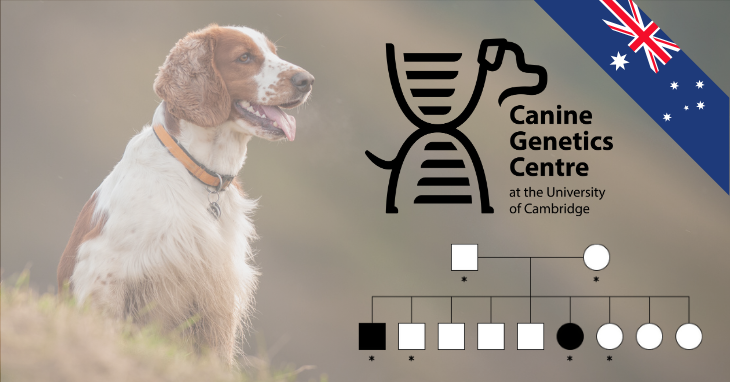
In November of 2024 we shared details of research that the Canine Genetics Centre had started, in collaboration with dog breeders and clinicians in Australia, to identify the genetic cause of an apparently novel inherited neurological disorder in Welsh Springer Spaniels.
The research got off to a very good start, thanks to generous funding from the Welsh Springer Spaniel community and a very co-operative breeder who collected DNA from the affected pups, their unaffected littermates and their parents too. DNA was extracted from the buccal swabs and the entire genomes of some of the litter, plus parents, were sequenced (* in the picture).
That is when the hard work began. Bruno Lopes, a veterinary neurologist doing a part-time PhD at Cambridge Vet School, began to analyse the genome sequences, working alongside Genetics Centre teammates Ellen Schofield and Katherine Stanbury. Because we had such comprehensive family material, we were confident that it wouldn’t be long before we identified the disease mutation.
When we analyse DNA sequence to identify disease mutations, we use computer software to compare the DNA sequence from affected and unaffected dogs of the same and different breeds, and we use different software to predict the effect of the DNA variants that we find. Because we thought that the new disease was recessive, we first collated all the variants that both affected puppies had two copies of, that both parents had a single copy of and that were absent from the genomes of all other breeds. And then we filtered these variants based on their predicted effect on the relevant protein.
We were very surprised when we didn’t find a single variant that fitted the expected segregation pattern and was predicted to damage a protein significantly. But we were determined to find this mutation, so we kept hunting…. and kept hunting! We now have some potential areas to follow up but there is still a long road or further dry lab work, followed by getting into the lab to further investigate potential variants before we can develop a robust DNA test.
Whether it is finding mutations or securing funding for our research – the Canine Genetics Centre never gives up!
Comments are closed