
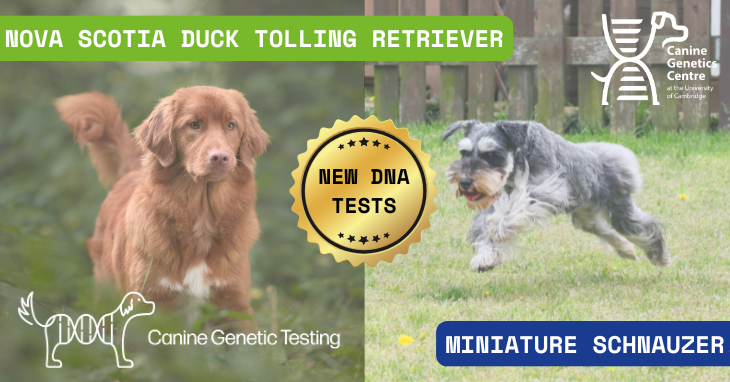
New DNA tests launched for Progressive Retinal Atrophy (PRA) in two breeds
We are very excited to announce that earlier this week we launched not one, but TWO new tests for progressive retinal atrophy (PRA) in two[…]
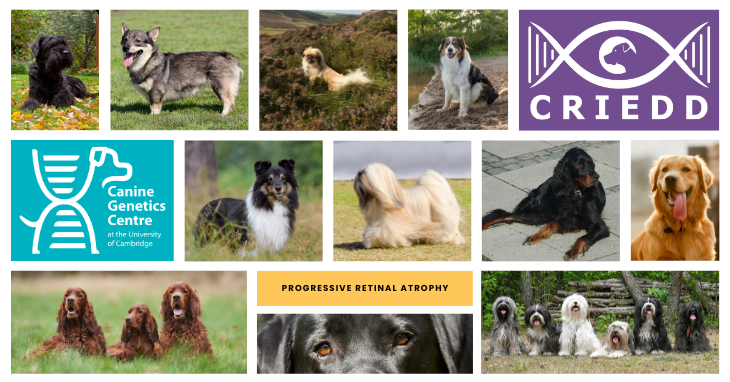
Progressive retinal atrophy (PRA)
Canine inherited eye diseases (IEDs) affect over 160 breeds of dog and are caused by variants located in over 60 different genes. Almost half of[…]
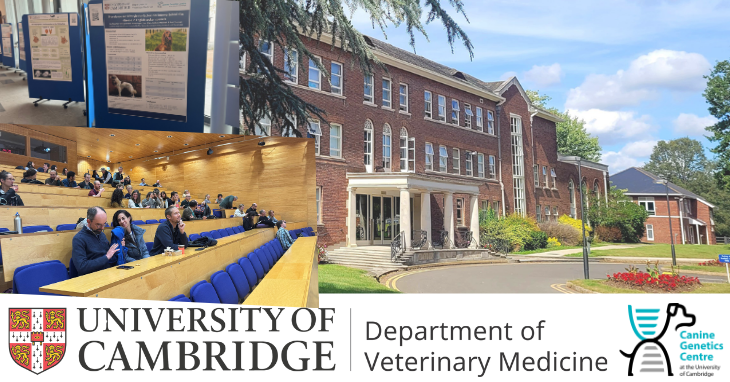
Cambridge Vet School – One big research family!
The Canine Genetics Centre is proud to be a part of one of the UK’s leading Veterinary schools. Cambridge Vet school not only matriculates incredible[…]

A novel disease in the Segugio Italiano dog breed – our search for the causal variant
Our research project dedicated to inherited eye disease (IED) in dogs, CRIEDD, often sees us work in close collaboration with veterinary ophthalmologists. When they see[…]

Help us cross the line!
Earlier this week, Dr. Cathryn Mellersh gave an online presentation where she highlighted a few of the significant milestones the Canine Genetics Centre has reached,[…]
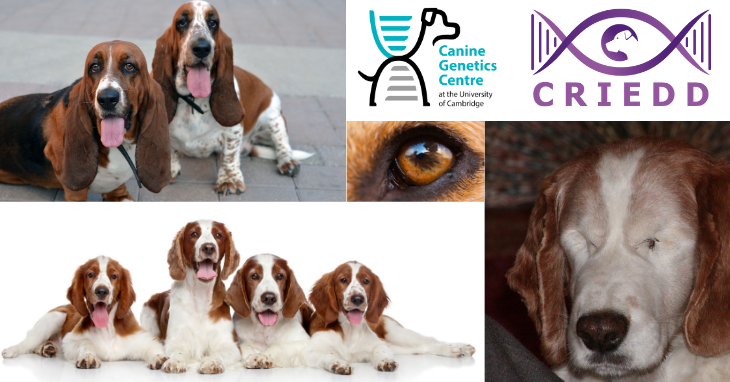
Relieving the pressure of inherited glaucoma in dogs
The Canine Genetics Centre is excited to be resuming its research into primary glaucoma in dogs. This article explains what glaucoma is, and what we[…]

New grant secured from the Jean Lanning Foundation
The trustees of the Jean Lanning Foundation are delighted to announce a major grant to the Canine Genetics Centre (CGC) at Cambridge University to fund[…]
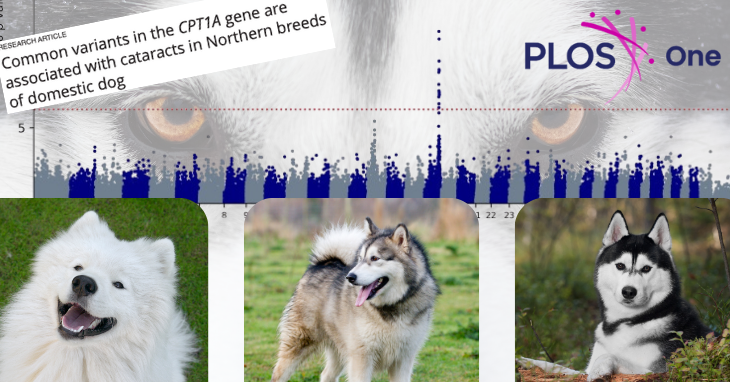
Analysis showing an association between CPT1A and cataracts in Northern breeds published
The Canine Genetics Centre has a successful track record investigating the genetic basis of inherited eye diseases in dogs. However, some eye diseases have been[…]

Canine Genetics Research Day 2025
On Friday March 21st, 2025, the Canine Genetics Centre team welcomed thirty enthusiastic delegates to the University of Cambridge’s West Hub building for their second[…]

Presentation about the CGC Biobank – What? Uses? Why?
The CGC’s DNA sample collection is unique. Developed over the last quarter of a century, and comprising DNA samples from over 42,000 different dogs, it[…]
Recent Publications
Wade CM et al. Autosomal dominant primary hyperparathyroidism in the Keeshond dog breed is strongly associated with a missense variant in sirtuin-6. Anim Genet. 2025 Dec;56(6)
Ricketts SL et al. Common variants in the CPT1A gene are associated with cataracts in Northern breeds of domestic dog. PLoS One. 2025 Apr 4
Jenkins CA et al. Genome-wide association study of idiopathic epilepsy in the Italian Spinone dog breed. PLoS One. 2025 Mar 5
Support the CGC by using Canine Genetic Testing (CAGT) for all your DNA testing needs.
UK-based and 100% of profits are reinvested into our research.
Recent News
© 2026 The Canine Genetics Centre | Department of Veterinary Medicine, University of Cambridge, Madingley Road, Cambridge, CB3 0ES